.png)
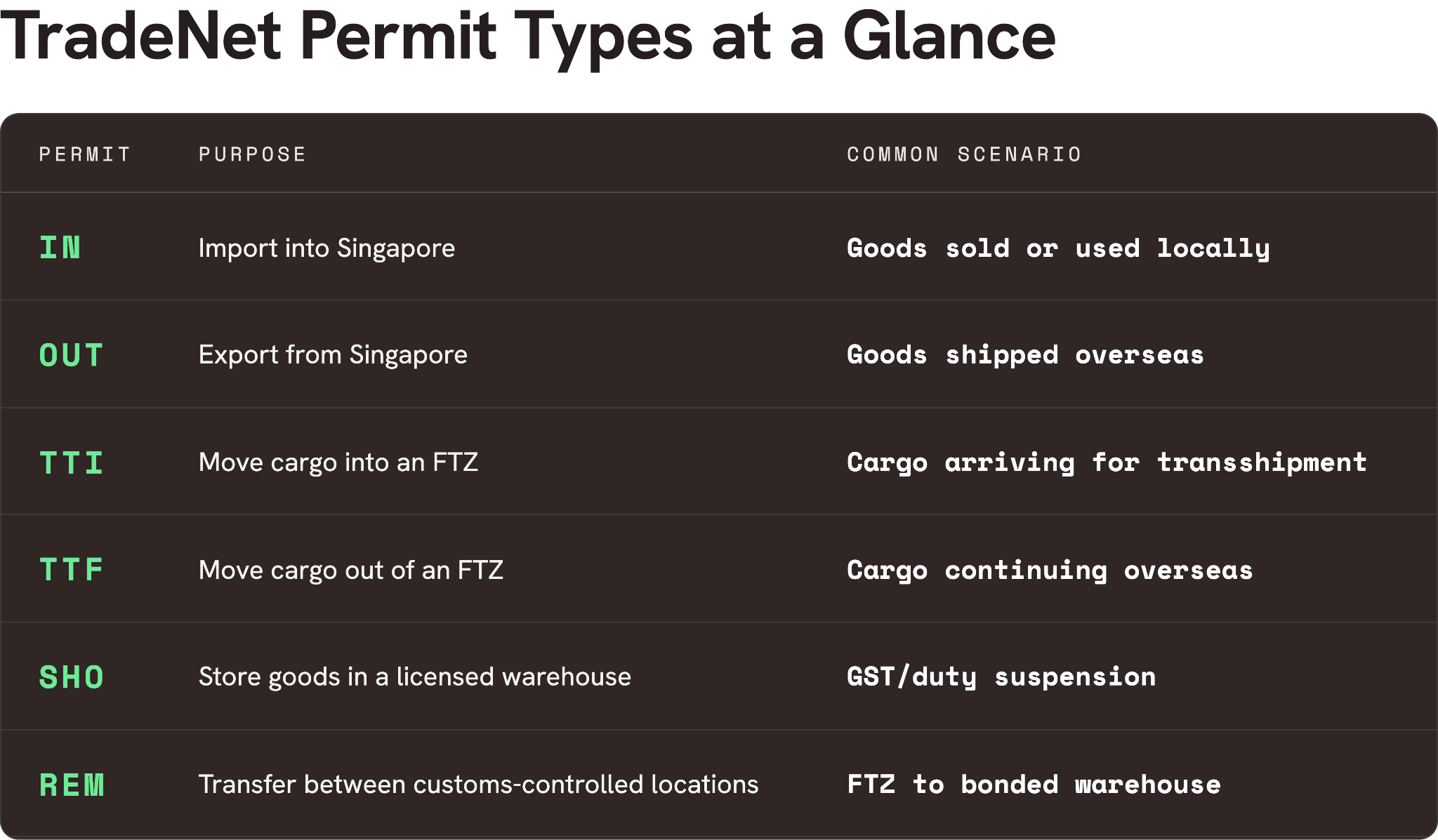
If you're importing or exporting goods in Singapore, you've likely run into permit codes like IN, OUT, TTI, TTF, SHO, and REM. Picking the wrong one is one of the most common (and costly) mistakes new shippers make.
This guide breaks down what each TradeNet permit type means, when to use it, and what to watch out for, so your cargo clears customs without delay.
Quick answer:
- IN and OUT permits cover standard imports and exports.
- TTI/TTF handle transshipment through a Free Trade Zone.
- SHO and REM apply to goods moving in and out of licensed or bonded warehouses.
Full breakdown below.
What Is TradeNet?
TradeNet is Singapore's electronic trade declaration system. It lets businesses submit permit applications to Singapore Customs and other government agencies through a single platform. Almost every shipment entering, leaving, or moving within Singapore needs a permit before it can clear customs.
The right permit depends on four things:
- Where your cargo is coming from
- Where it's going
- Whether duties or GST apply
- Whether the goods stay within a Free Trade Zone (FTZ) or move through a bonded warehouse
Get any of these wrong and you risk delays, penalties, or unnecessary costs. Here's how each permit type works.
IN Permit (Import)
An IN Permit applies when goods are imported into Singapore for local consumption. This is the most common permit type for businesses bringing products in for sale, use, or distribution.
Typical examples:
- Importing electronics from China for sale in Singapore
- Bringing machinery into Singapore for installation
- Importing retail inventory
What to watch for:
- GST and duties (where applicable) are usually payable
- Accurate HS codes and cargo values are essential — errors here are a top cause of customs holds
- Controlled goods may need approval from other government agencies before the permit is issued
OUT Permit (Export)
An OUT Permit is required when goods leave Singapore permanently — whether they were made locally or previously imported.
Typical examples:
- Exporting products to Malaysia
- Shipping machinery to Australia
- Sending finished goods to overseas customers
What to watch for:
- Some controlled products need export licences
- Supporting commercial documents must match the permit declaration exactly
TTI Permit (Transshipment Into FTZ)
TTI stands for Transshipment Into. It applies when imported cargo moves into a Free Trade Zone (FTZ) eg PSA terminal or Changi Airfreight Centre, without entering Singapore's customs territory. The goods are not treated as imported for local use.
Typical examples:
- Containers arriving in Singapore before loading onto another vessel
- Cargo awaiting a connecting flight
Why it matters: GST and duties are generally deferred while goods remain in the FTZ, making TTI ideal for businesses using Singapore as a regional transshipment hub.
TTF Permit (Transshipment From FTZ)
TTF stands for Transshipment From. It's used when cargo leaves the FTZ to continue to another overseas destination, without ever officially entering Singapore for local use.
Typical examples:
- Cargo arriving from Europe before onward shipment to Indonesia
- Goods transferred between international vessels
What to watch for: Timing matters here. Missed vessel connections or delays can trigger permit amendments or extra documentation.
SHO Permit (Store Handling Operations)
A SHO Permit applies when cargo moves into or out of licensed premises, including Zero-GST or bonded warehouses, which let approved businesses store goods without immediately paying GST or duties.
Typical examples:
- High-value electronics
- Alcohol and tobacco
- Goods awaiting future export
- Inventory held ahead of local distribution
Why it matters: SHO improves cash flow by deferring tax payments, and suits businesses managing regional inventory. SW Logistics operates a Zero-GST bonded warehouse at Jurong Logistics Hub built specifically for this kind of deferred-duty storage.
REM Permit (Removal)
A REM Permit is used when goods move from one customs-controlled location to another, remaining under customs control throughout the transfer.
Typical examples:
- Moving cargo from an FTZ to a bonded warehouse
- Transferring goods between licensed warehouses
- Relocating customs-controlled cargo for storage
What to watch for: Movements must follow customs regulations closely and are subject to monitoring, so documentation needs to be precise.
Common Permit Mistakes to Avoid
Even experienced importers run into customs delays over permit errors. The most frequent ones:
- Selecting the wrong permit type
- Incorrect HS code declarations
- Under-declaring cargo value
- Applying for permits too late
- Missing approvals for controlled goods
- Assuming all transshipment cargo follows the same process
Working with an experienced freight forwarder reduces these risks and keeps cargo compliant end to end. Our customs clearance service covers exactly this: import, export, and bonded permit filing handled by a team that knows TradeNet inside out.
FAQ: TradeNet Permits
Do all imports require an IN Permit? Most commercial imports do. Requirements vary by goods type, customs status, and whether the shipment stays within an FTZ.
What's the difference between TTI and TTF? TTI covers cargo moving into Singapore's Free Trade Zone after arrival. TTF covers cargo leaving the FTZ to continue to another international destination.
Can I apply for TradeNet permits myself? Yes. Businesses registered with Singapore Customs can submit applications directly, or appoint a declaring agent or freight forwarder to handle it on their behalf.
Which permit applies if my cargo is only passing through Singapore? Transshipment permits — TTI and TTF — typically apply when cargo stays within the FTZ before continuing to another country.
Need Help With TradeNet Permits?
Choosing the right permit is critical to smooth customs clearance — whether you're importing, exporting, or using Singapore as a regional logistics hub.
SW Logistics handles TradeNet permit applications, customs documentation, freight forwarding, and warehousing across Asia and beyond, backed by 25 years of trade compliance experience. If you're unsure which permit your shipment needs, get in touch with our team or request a freight quote — we'll handle the paperwork so your cargo keeps moving.
Related reading: What Is a Freight Forwarder? Everything You Need to Know Before You Ship · 6 Steps to Choose the Right Freight Forwarder for You